No products in the cart.
How Do You Choose PVC Compound for Medical Tubing?
Choosing PVC Compound for medical tubing requires more than checking hardness or pellet appearance. Tubing dimensions, flexibility, clarity, kink resistance, plasticizer system, extrusion behavior, contact conditions and sterilization can all influence finished product performance. This article explains the main technical factors commonly considered when evaluating PVC materials for medical tubing applications and why final suitability must be verified on the finished device.
1. Start with the finished tubing application
The first step in evaluating PVC Compound for medical tubing is to identify exactly what type of tubing will be produced. Medical tubing covers many different products, and each design can create a different set of mechanical, chemical and processing requirements. Infusion tubing, respiratory tubing, suction tubing and tubing used as part of a catheter system should therefore not be treated as one material category.
For example, ISO 8536 4:2019 specifies requirements for single use, gravity feed infusion sets. The standard focuses on the finished infusion system and its compatibility with infusion containers and intravenous equipment. ISO 5367:2023 covers breathing sets and connectors used with anaesthetic systems, ventilators, humidifiers and nebulizers. These are different product groups with different functional requirements.
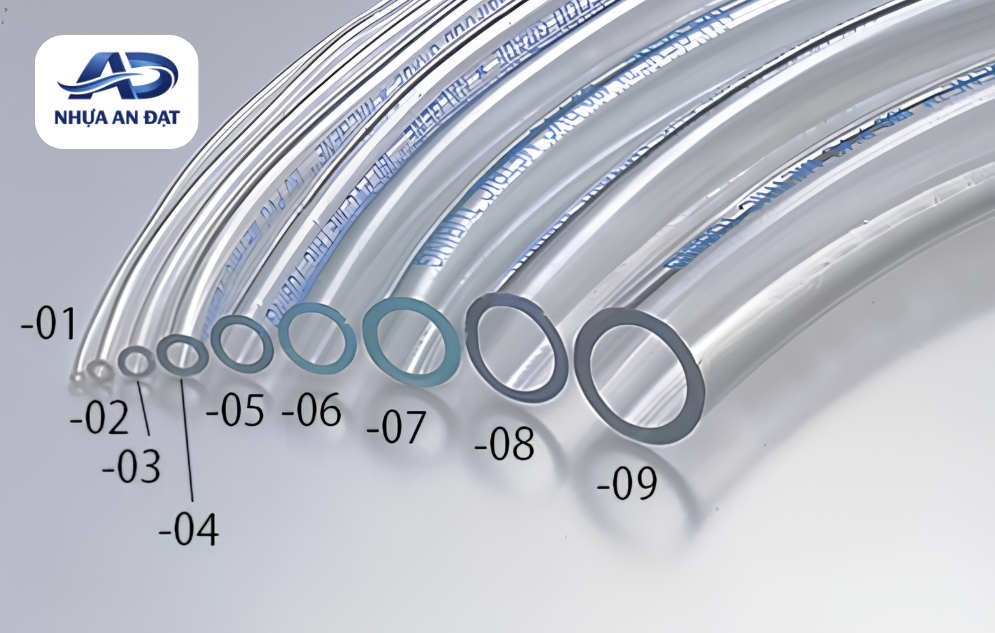
Before considering a PVC formulation, important product information normally includes the inner diameter, outer diameter, wall thickness, tubing length, bend conditions, connection points and expected operating environment.
The medium transported through the tubing also matters. A tube carrying an aqueous liquid can present a different chemical exposure condition from tubing exposed to a lipid containing formulation or another extraction medium.
For this reason, selecting material should begin with the finished tubing specification, not with a generic request such as “transparent soft PVC” or “medical PVC Shore A 70”.
The product design establishes what the material actually needs to accomplish.
2. Define hardness and mechanical requirements
Hardness is one of the most frequently used parameters when describing flexible PVC, but Shore A alone cannot determine whether a tubing design will perform correctly. ASTM D2240 describes durometer hardness measurement, but the result should be interpreted as one material property rather than a complete measure of tubing flexibility or structural stability.
Two PVC formulations can have similar Shore A readings while showing different behavior during bending, compression or long term deformation. Differences in resin, plasticizer content and additive systems can change modulus, recovery and surface behavior even when nominal hardness is similar.

Important mechanical factors may include:
- Target Shore A: This provides an initial range for material softness. It should be evaluated together with tubing dimensions.
- Wall thickness: A thicker tube can resist collapse more effectively even when made from a softer compound. A thin wall tube may behave very differently at the same Shore A.
- Kink resistance: The tube should maintain an adequate flow path when bent to the radius expected during use.
- Compression recovery: After being pinched or compressed, the tube may need to return close to its original shape within a defined period.
- Tensile strength and elongation: These properties help describe how the tubing responds to pulling and deformation.
- Connector interaction: Material that is too soft can deform around a fitting, while material that is too stiff may require excessive insertion force.
For these reasons, the relevant question is not simply “What Shore A should medical tubing use?” The better question is what combination of material properties and tubing geometry produces the required finished product behavior.
3. Evaluate clarity and extrusion stability
Transparency is important for many medical tubing applications because the fluid path may need to remain visually observable. However, clear PVC pellets do not automatically produce clear tubing.
Final optical appearance depends on the entire formulation and extrusion process. Resin compatibility, plasticizer, stabilizer, lubricant, pigment, fusion condition, melt temperature, die condition and cooling can all influence haze and visual uniformity.
Several characteristics are commonly examined:
- Clarity and haze: Tubing should be evaluated at the actual production wall thickness. Comparing samples with different thicknesses can create misleading conclusions about transparency.
- Background color: A tube can remain transparent while developing a yellow or blue tint. Color therefore needs to be considered separately from haze.
- Gel particles: Poorly fused material or contamination can appear as visible defects in transparent tubing.
- Black specks: These may indicate contamination, degraded polymer or residue from equipment.
- Bubbles: Moisture, trapped gas, thermal degradation or processing instability can produce voids in the tube wall.
- Surface streaks: Flow instability, die condition and inconsistent fusion may appear as longitudinal marks.
Material behavior also has to remain stable during continuous extrusion. A sample that looks acceptable during the first few metres of production may later show pressure variation, dimensional drift or color change.
For this reason, evaluating PVC for tubing requires monitoring temperature, screw speed, output, die pressure, haul off conditions and dimensional stability during a representative production run.
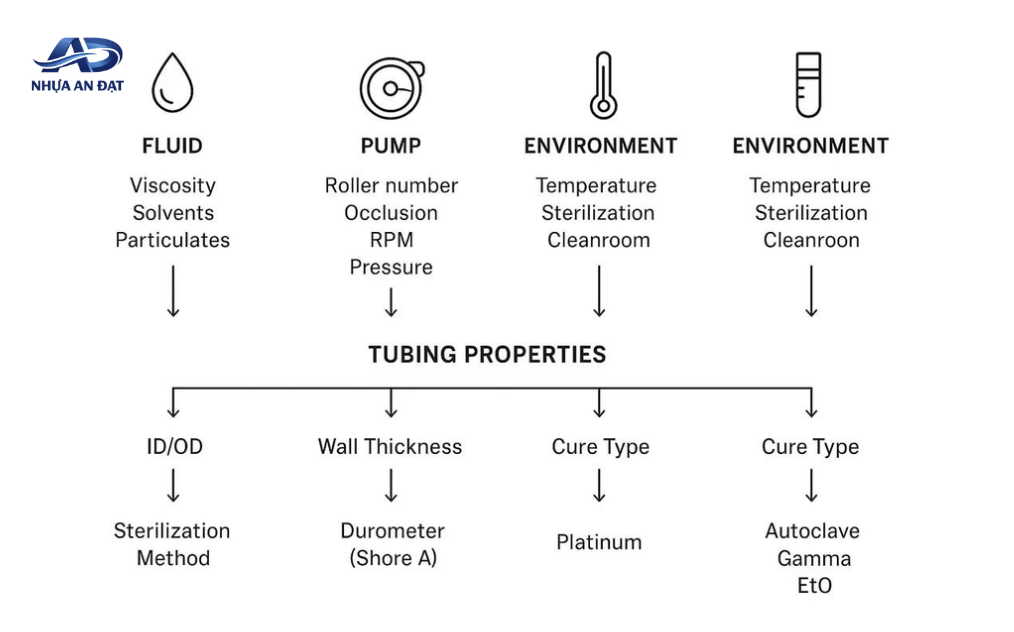
The useful material is therefore not simply the clearest compound. It is a compound that can maintain the required optical and dimensional properties within a stable processing window.
4. Understand plasticizer and chemical requirements
Flexible PVC normally contains a plasticizer system that reduces stiffness and allows the material to achieve the required flexibility. Different plasticizers can influence hardness, migration behavior, processing, surface condition and long term stability.
A material specification should therefore identify the actual chemical requirement instead of relying on broad descriptions such as “safe plasticizer”, “low migration” or “DEHP free”.
For example, a DEHP free requirement means that DEHP is being controlled according to a defined specification. It does not automatically establish that the material is free of every phthalate, has low migration under all conditions or is suitable for every type of medical contact.
Chemical evaluation is also broader than the plasticizer alone.
ISO 10993 18:2020 addresses chemical characterization of medical device materials within a risk management process. Its scope includes establishing information about material composition and chemical constituents relevant to biological evaluation.
Depending on the finished product, evaluation may need to consider substances associated with resin, stabilizers, lubricants, pigments, processing aids and manufacturing processes.
The conditions used for chemical evaluation also matter. Temperature, contact duration, surface area, extraction medium and sterilization condition can affect what substances are detected and at what levels.
For that reason, a report generated from a pellet or laboratory plaque cannot automatically represent tubing with a different thickness, formulation, processing history or contact environment.
Chemical requirements must ultimately be defined in relation to the finished medical device and its intended use.
5. Consider sterilization before selecting the material
Sterilization can change the properties of a polymer product, so it should be considered before a material is finalized rather than after production has already been established.
Two processes frequently discussed for polymer medical devices are ethylene oxide sterilization and radiation sterilization.
ISO 11135:2014 specifies requirements for the development, validation and routine control of ethylene oxide sterilization processes for medical devices. A new edition is currently progressing through ISO development, while the 2014 edition remains the published edition at this time.
Radiation sterilization is addressed by ISO 11137 1:2025, which covers development, validation and routine control of sterilization processes using radiation.
For PVC tubing, the properties commonly compared before and after sterilization may include:
- Color
- Clarity
- Shore A
- Tensile strength
- Elongation
- Kink behavior
- Surface condition
- Odor
- Dimensional stability
- Connector performance
Radiation can be particularly relevant when evaluating color stability, while EO processes require attention to the entire sterilization cycle and subsequent aeration conditions.The critical point is that a statement such as “EO compatible” or “gamma resistant” should not be inferred simply from the name of a PVC formulation.
The material has to be evaluated on the actual finished product under the sterilization conditions relevant to that device.
6. Why finished device testing is more important than pellet data
Pellet data are useful for material identification and manufacturing control, but they represent only the starting point of the evaluation.
A typical PVC Compound technical data sheet may contain hardness, density, tensile strength, elongation or other material properties. These values can help compare materials, but they cannot describe every characteristic of a finished tube.
Once the compound passes through extrusion, several new variables are introduced. The polymer experiences heat and shear. Tubing geometry is created. Cooling produces dimensional and residual stress effects. Connectors, printing, adhesives or other components may then be added. Sterilization and packaging introduce further processing history.
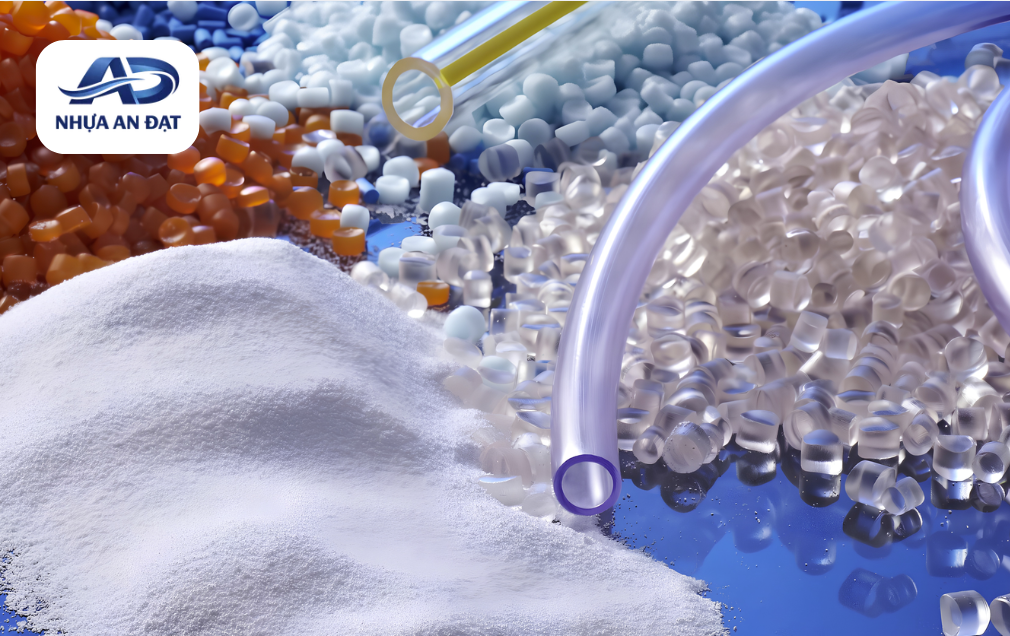
ISO 10993 1:2025 reflects this broader approach by addressing biological safety within a risk management process that considers the medical device, its materials and the nature and duration of exposure. It is therefore inappropriate to treat biological safety as a universal property of a raw polymer pellet.
For the same reason:
- A Shore A result does not prove kink resistance.
- A clear pellet does not prove a finished tube will have low haze.
- A DEHP free formulation does not prove low migration under every condition.
- A report for one PVC formulation does not automatically apply to another hardness, color or additive system.
- A material that performs before sterilization may behave differently afterwards.
The finished tubing or finished medical device is therefore the appropriate level at which critical functional, chemical and biological requirements need to be confirmed.
7. Questions to ask when comparing PVC materials
A structured comparison helps prevent one specification from dominating the selection process. Instead of comparing only price, Shore A or plasticizer type, the material can be reviewed through several groups of information.
| Evaluation area | Questions to consider |
|---|---|
| Product design | What are the ID, OD and wall thickness? |
| Mechanical | What flexibility, recovery and kink behavior are required? |
| Optical | Is transparency required? What haze or color limits apply? |
| Processing | What extrusion conditions are used? |
| Chemical | What substances are restricted? |
| Plasticizer | Is a specific plasticizer system required or prohibited? |
| Contact | What medium contacts the tubing and for how long? |
| Sterilization | Is the product treated with EO, gamma or another process? |
| Finished product | What performance tests must be passed? |
| Documentation | What material and traceability records are required? |
This type of framework is useful because material selection usually involves trade offs. Increasing flexibility can influence dimensional stability. Changing a plasticizer can change both processing and chemical behavior. Improving one optical property may require changes that affect another property.
The objective is therefore not to identify one PVC Compound that is universally “best for medical tubing”.
The objective is to understand which material characteristics must be verified for a specific tube and a specific medical device application.
8. Frequently Asked Questions About PVC Compound for Medical Tubing
8.1 Can the same PVC Compound be used for all medical tubing?
No general conclusion can be made.
Infusion tubing, breathing tubing, suction tubing and catheter components have different geometries and functions. Even within the same product category, changing diameter or wall thickness can change kink resistance, flexibility and processing behavior.
ISO standards themselves address these product groups separately. For example, ISO 8536 4 addresses gravity feed infusion sets, while ISO 5367 addresses breathing sets and connectors.
Material suitability therefore has to be considered for the actual product.
8.2 Is Shore A enough to select PVC for medical tubing?
No.
Shore A provides information about durometer hardness, but tubing performance also depends on modulus, wall thickness, diameter, plasticizer system and product design. ASTM D2240 provides the test method for durometer hardness, but the measurement does not replace finished tubing tests such as kink or compression recovery.
Two compounds with the same Shore A may therefore produce tubes with different functional behavior.
8.3 Does DEHP free mean the PVC has low migration?
Not necessarily.
DEHP free identifies the absence or control of one specific plasticizer according to the applicable specification. Migration depends on the complete formulation and the conditions under which the product is evaluated.
Chemical characterization should consider the actual device materials and relevant constituents within the risk management process described by ISO 10993 18.
8.4 Can a material test report prove that the finished medical tube is biocompatible?
A raw material report alone is not sufficient to establish biological safety for every finished device.
ISO 10993 1:2025 evaluates biological safety in relation to the device, material composition, nature of contact and exposure duration.
Manufacturing, sterilization and other components of the finished device can also affect the final evaluation.
9. Important note about AN ĐẠT
This article is published for technical information and content expansion only.
Công Ty TNHH Nhựa An Đạt is a manufacturer and supplier of PVC Compound. However, AN ĐẠT does not position itself as a supplier of certified medical grade PVC granules and does not provide medical material selection, medical device compliance consulting or confirmation that a PVC Compound is suitable for a specific medical device.
The technical information discussed in this article, including medical tubing design, chemical characterization, sterilization and biological evaluation, is intended to help readers understand the factors involved in PVC material applications.
It should not be interpreted as a product claim, medical recommendation or statement that PVC Compound supplied by AN ĐẠT meets ISO 10993, medical device requirements or a specific medical tubing application.
For medical devices, the manufacturer of the finished product must establish its own material specifications, testing program, regulatory requirements and acceptance criteria with appropriate technical and testing organizations.
AN ĐẠT's core business remains the production and supply of PVC Compound mềm and PVC Compound cứng according to defined technical requirements for its actual product portfolio, rather than certification or consulting for medical device materials.
10. Conclusion
Choosing PVC Compound for medical tubing involves considerably more than identifying a soft and transparent PVC material. Product geometry, Shore A, mechanical behavior, clarity, extrusion stability, plasticizer system, chemical requirements, contact conditions and sterilization can all influence finished tubing performance.
The most important principle is to separate raw material properties from finished medical device suitability. Pellet data can describe and control a material, but they cannot by themselves establish kink performance, migration behavior, sterilization compatibility or biological safety for every finished product.
ISO 10993 1:2025 reinforces a risk based approach that evaluates biological safety in the context of the medical device and its intended exposure. ISO 10993 18:2020 provides the framework for chemical characterization within that process.
Therefore, information about PVC Compound should be used as one technical input in a broader finished product evaluation. The requirements and final conclusions must remain linked to the actual medical device being manufactured.
Xem thêm
Nhựa PVC và sản xuất hạt nhựa PVC Compound
Gia công hạt nhựa PVC theo yêu cầu kỹ thuật
Nhựa nguyên sinh có độc không? Hiểu đúng để chọn đúng
Địa chỉ: 267A Phạm Văn Cội, Tổ 6, Ấp Phú Hiệp, xã Phú Hòa Đông, TP.HCM, Vietnam.
Hotline/ ZALO: 0779 250 679
Website: https://andatplastic.vn/
Fanpage: https://www.facebook.com/share/18ZsaR5oPL/?mibextid=wwXIfr
Bài viết liên quan
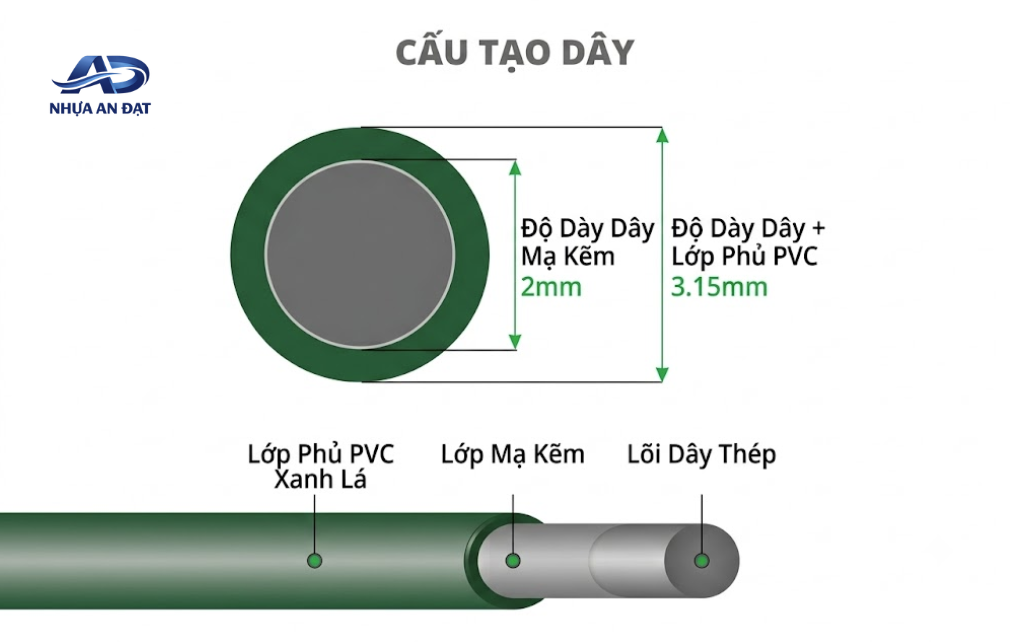
PVC Compound bọc dây rọ đá cần yêu cầu gì?
PVC Compound bọc dây rọ đá cần kiểm soát độ cứng, density, tensile, elongation, bề mặt và độ ổn định khi đùn, xoắn và sử dụng ngoài môi trường.
Tấm PVC võng không đều khi thermoforming do đâu?
Tấm PVC võng không đều khi thermoforming có thể do độ dày, orientation, fusion hoặc phân bố nhiệt. Cần tách nguyên nhân vật liệu và thiết bị.
Tấm PVC bị trắng khi thermoforming: Nguyên nhân và cách xử lý
Tấm PVC bị trắng khi thermoforming có thể do fusion, impact, orientation, nhiệt tạo hình hoặc tỷ lệ kéo giãn. Cần tách lỗi vật liệu và quy trình.